

Film Analysis and Review
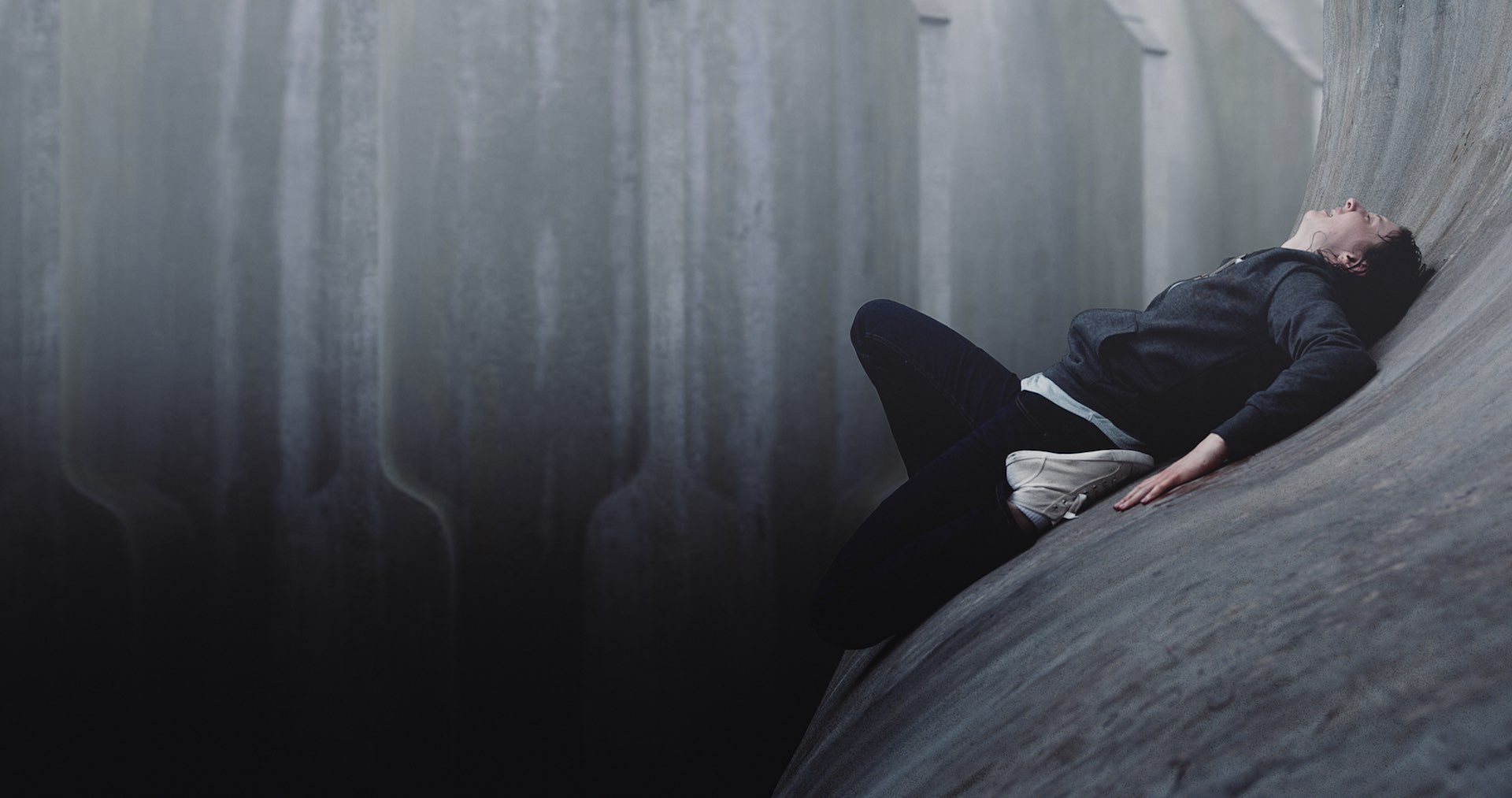
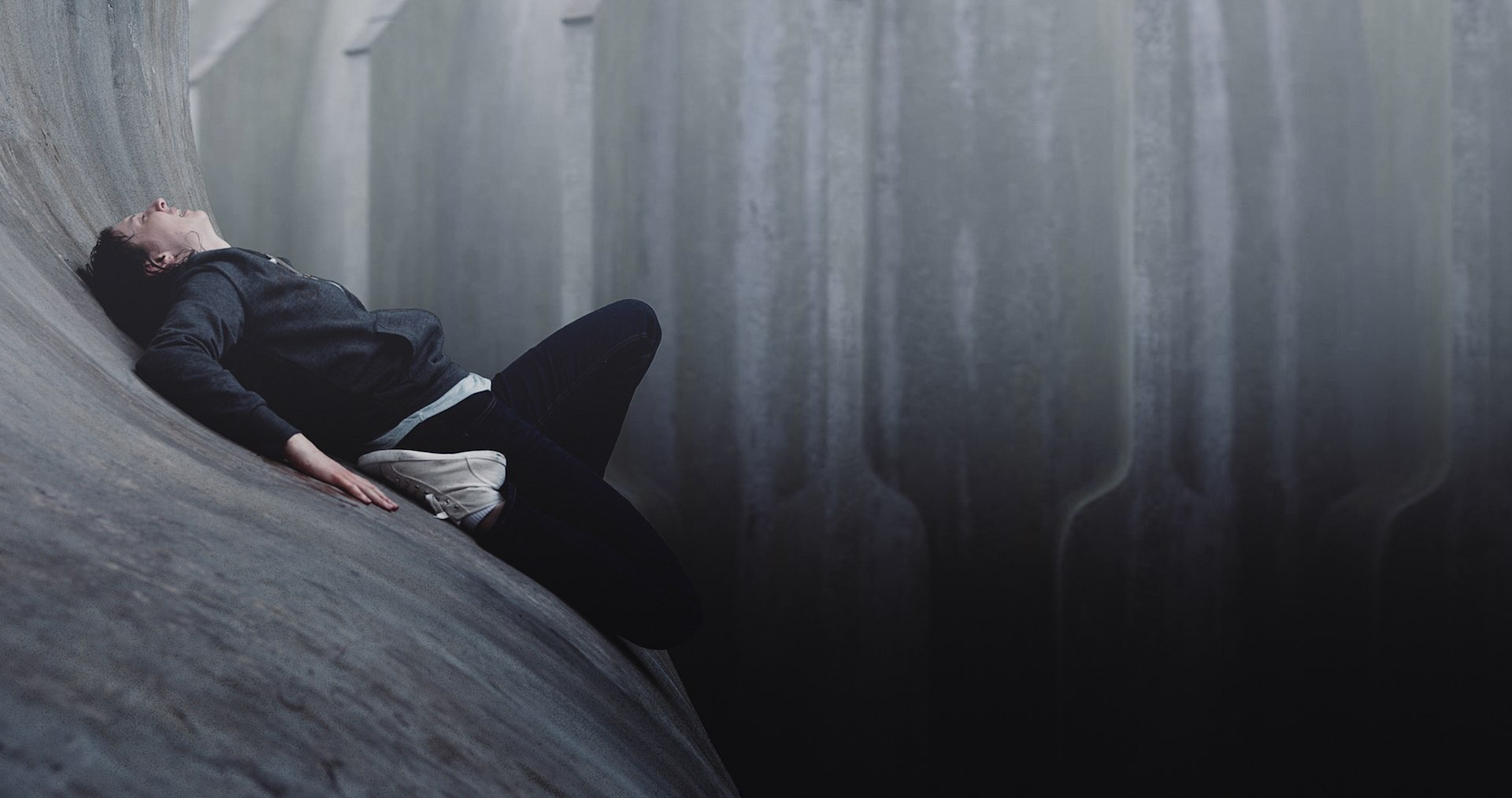
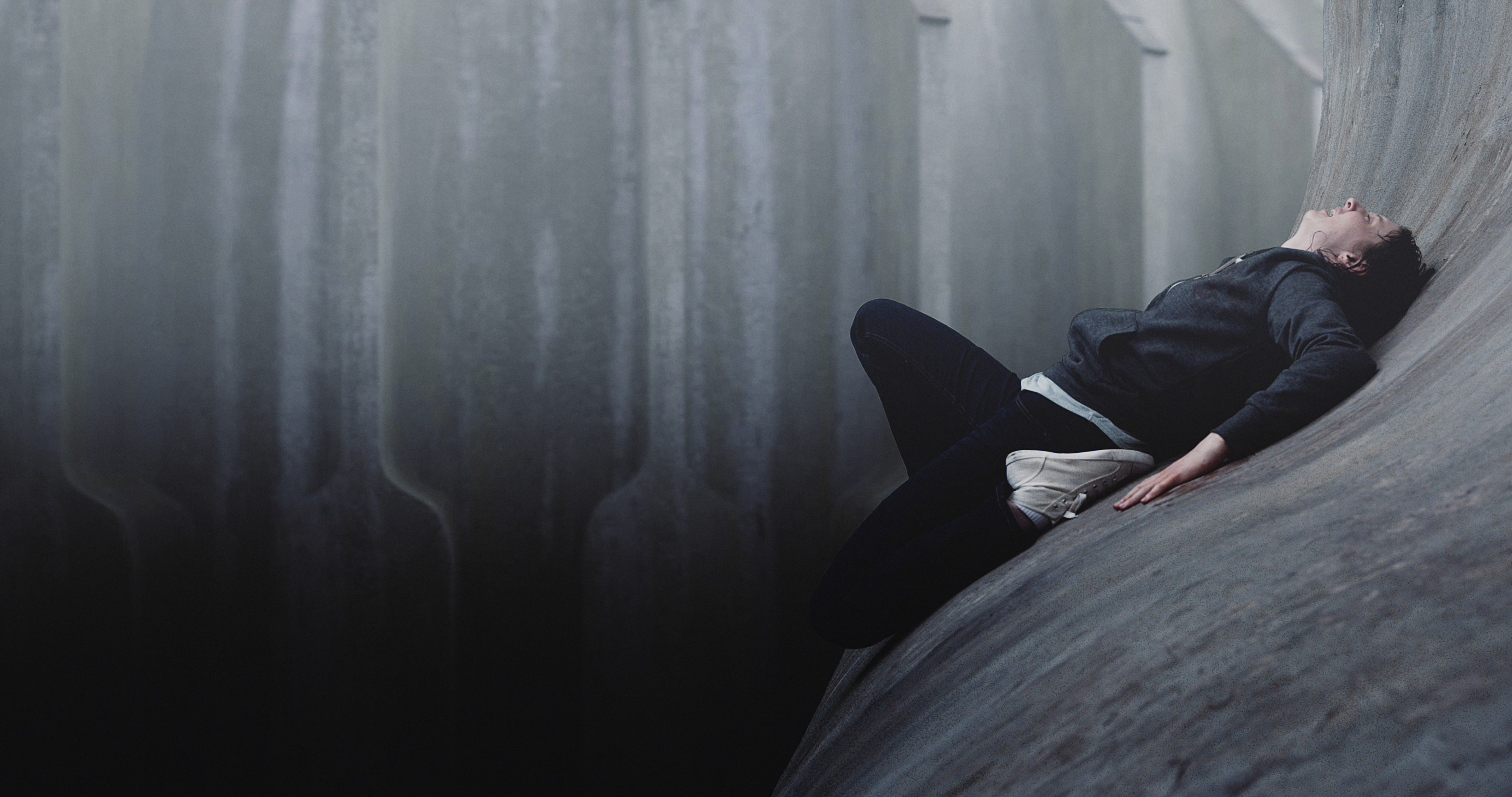
Curve begins without context and stays that way. A woman opens her eyes on a smooth concrete slope, her leg folded beneath her, an abyss below. Tim Egan offers no explanation for how she got there, no backstory, no other character, no dialogue. What he offers instead is ten minutes of sustained physical terror so precisely constructed that the film becomes something closer to a somatic experience than a narrative one. You watch it in your hands and your stomach.
The formal proposition is deceptively simple: one character, one location, one problem. She needs to move approximately three feet uphill without losing purchase on a surface that offers almost none. Egan makes this feel impossible within the first sixty seconds, and then he makes it worse. Her hands bleed. Her leg cramps. The surface is perfectly, cruelly smooth. The sound design fills the space below with something that breathes. The film understands that the most effective horror is often the most intimate, and there is nothing more intimate than the feeling of your own fingers failing to hold.
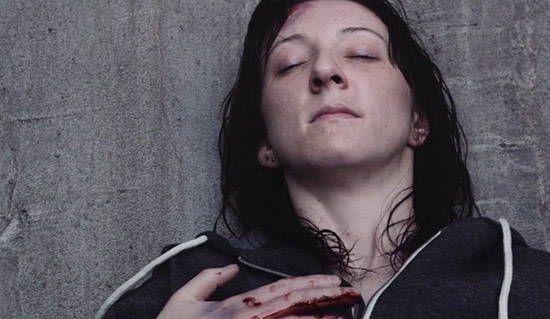
Laura Jane Turner's performance is the film's entire architecture. She does not speak, and she does not need to. Every decision she makes — how long to rest, when to try again, how to manage the information that her situation is getting worse — is registered entirely through her body and her face. The performance is physically exact and emotionally open at the same time, and it holds the film's ten minutes together without a single weak moment. The sound design, which keeps the void below quietly alive, is the film's invisible co-director.
Curve also works as allegory without forcing it. The image of a bloodied woman clinging to a surface that will not hold her, above a darkness that will, resonates at frequencies the film never explains. That it can carry the weight of grief, depression, survival instinct, and pure existential dread simultaneously is a function of its radical restraint. The less the film says, the more it means.
Filmmaker Insight and Production Context
Tim Egan wrote Curve in eight hours, from first concept to shooting script. The film draws on two separate experiences that arrived in his life within a short period of each other. The first was being struck by a car and finding himself on the asphalt of a busy road, gripping the surface, convinced a second vehicle was coming. The physical memory of wet tarmac under his fingers stayed with him. The second was a conversation with a friend struggling with grief, who described how the earth seemed to open beneath her every morning when she remembered her pain, and how each day became an act of clinging on by sheer force of tension.
Those two experiences — one purely physical, one entirely interior — fused into the film's central image: a woman on a curved surface above an abyss, in a situation that is simultaneously a nightmare of survival and a portrait of what certain kinds of pain feel like from the inside. Egan shot the film himself, serving as writer, director, cinematographer, and editor. Produced by Ahren Morris under the Lodestone Films banner, it was his first writing credit and only his second directorial project.
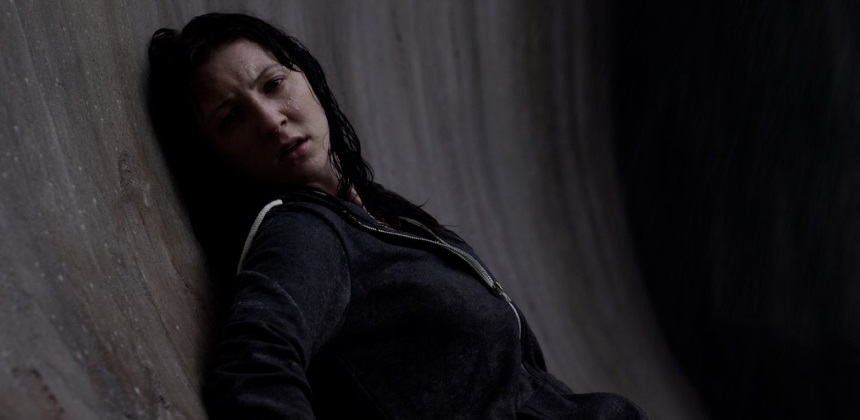
The film premiered at the Tribeca Film Festival in 2016 and went on to win Best Short at both Fantastic Fest and the Sitges Catalonian International Film Festival, as well as awards at the Sydney Underground Film Festival, the Made in Melbourne Film Festival, and the iHorror Awards. It is one of the most decorated short horror films of its decade, and has accumulated over 2.5 million Vimeo views. Egan has described the central ambition plainly: to make a film that deals with universal fears so directly that it needs no translation.
For Filmmakers: Lessons from CURVE
Constraint is not limitation. A single character, a single location, and a single physical problem generated ten minutes of sustained horror that won awards at Tribeca, Fantastic Fest, and Sitges. The premise is the film.
Sound design is the second character. The ambient breathing of the void below is what makes the space feel inhabited and the danger feel alive. In a dialogue-free film, sound carries all the emotional information that words would otherwise provide.
Write from physical experience, not concept. Egan's best material came from sensory memory — the specific feeling of wet tarmac, the specific texture of a surface that will not hold. Abstract ideas become powerful images when they are anchored in the body.
Performance is structure. With no plot and no dialogue, Turner's physical and emotional precision is the film's entire architecture. Casting a performer who can carry that weight is not a secondary decision; it is the primary one.
Leave the allegory implicit. Curve works as pure survival horror and as something much larger, simultaneously. Egan achieves this by never explaining either reading. The less the film says about what it means, the more room it has to mean everything.
Verdict
Curve is ten minutes of perfectly engineered dread, built from almost nothing: one performer, one set, no dialogue, and a sound design that turns empty space into something sentient. It is the most effective demonstration of minimalist horror filmmaking in recent short cinema, and it earns every one of its festival wins. Once seen, the image of those hands on that surface does not leave you.
⭐ Curated Shorts Pick
Primal spare unforgettable