

Film Analysis and Review
Castells opens on a mountain at dusk and immediately refuses to hurry. The camera holds on the landscape, on light draining from stone, before it brings you into the noise and press of a stadium floor where hundreds of people are organising themselves into something that should not be possible. Pedro de la Fuente and James Worsley, the directing duo behind Autobahn, understood from the start that the castell — the Catalan human tower — is a visual phenomenon that exists at the limit of what bodies can do together, and that the film's job was to place you inside that limit rather than observe it from a safe distance.
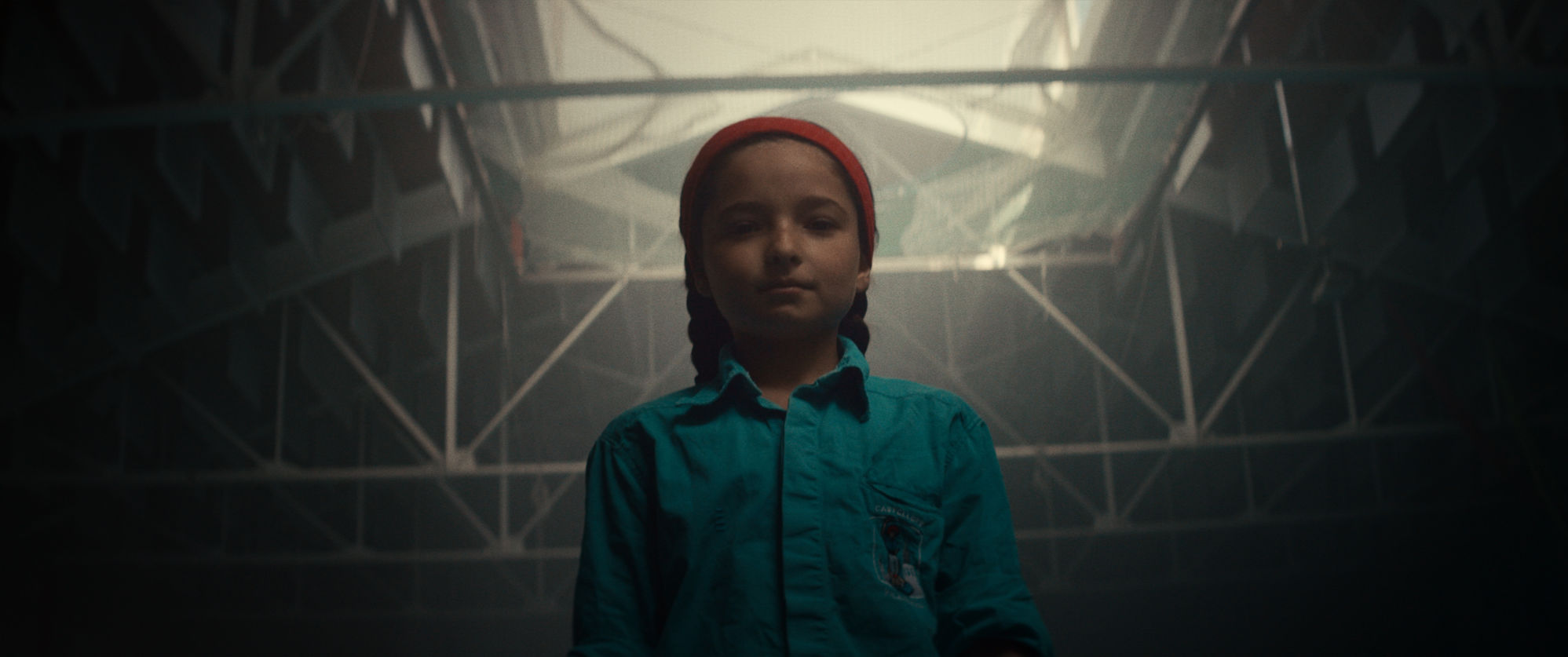
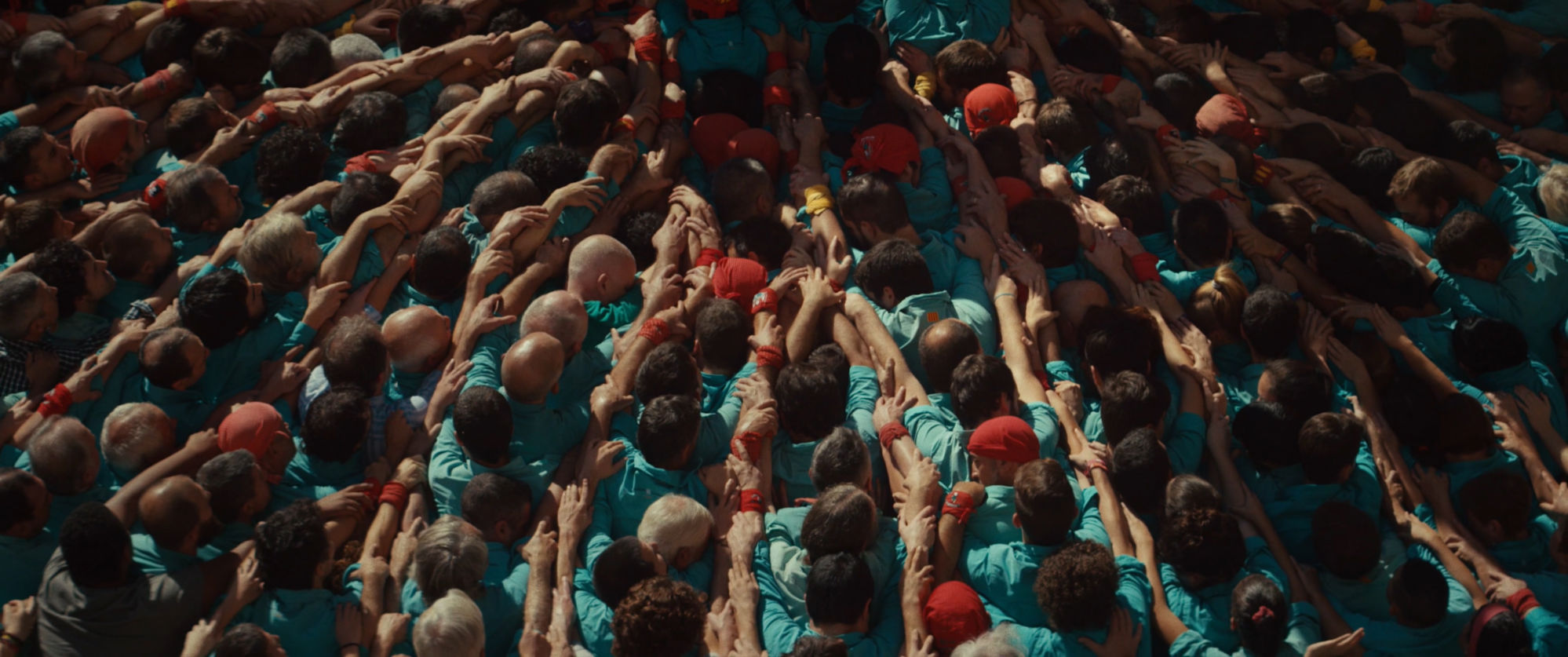
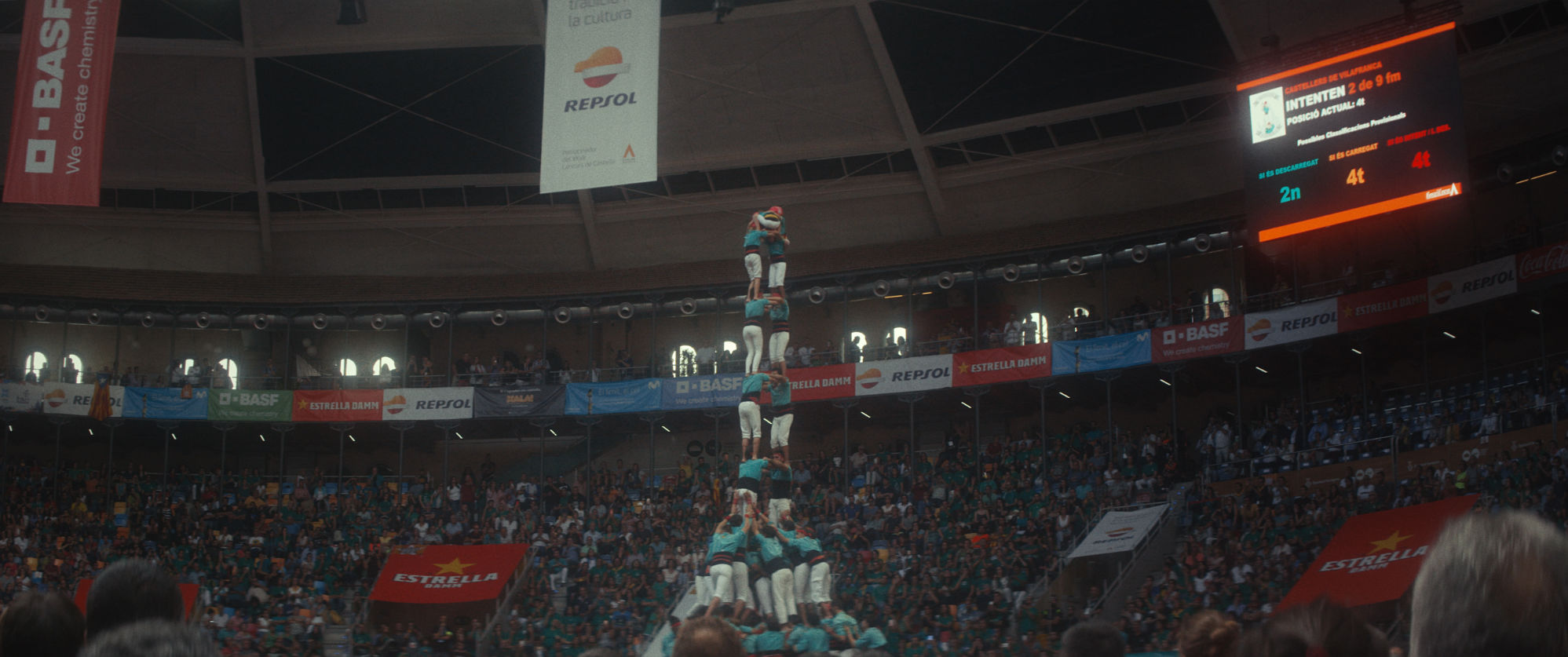
What distinguishes Castells from the usual documentary treatment of spectacle is its refusal to explain. There is no narration, no presenter, no title card telling you what a castell is or how old the tradition is. The film earns your understanding through image and sensation: the hands gripping shoulders, the boots finding footholds, the small figure in white climbing above the crowd until the frame can barely contain the height. By the time the tower reaches its full extension, you have been given everything you need to understand what it cost to get there, and the film has not told you a single fact.
The score by Russ Chimes — who also released a standalone EP soundtrack for the film — does the work that narration would have done in lesser hands. It builds with the towers: slow, accumulating, reaching towards something that feels both inevitable and impossible. Sound design by Mount Audio layers the ambient crowd beneath it, the breathing and the shifting weight, so that even the quieter passages carry mass and tension. The colouring by Alex Gregory at The Mill gives the whole film the quality of something remembered: warm, slightly saturated, already mythic.
Filmmaker Insight and Production Context
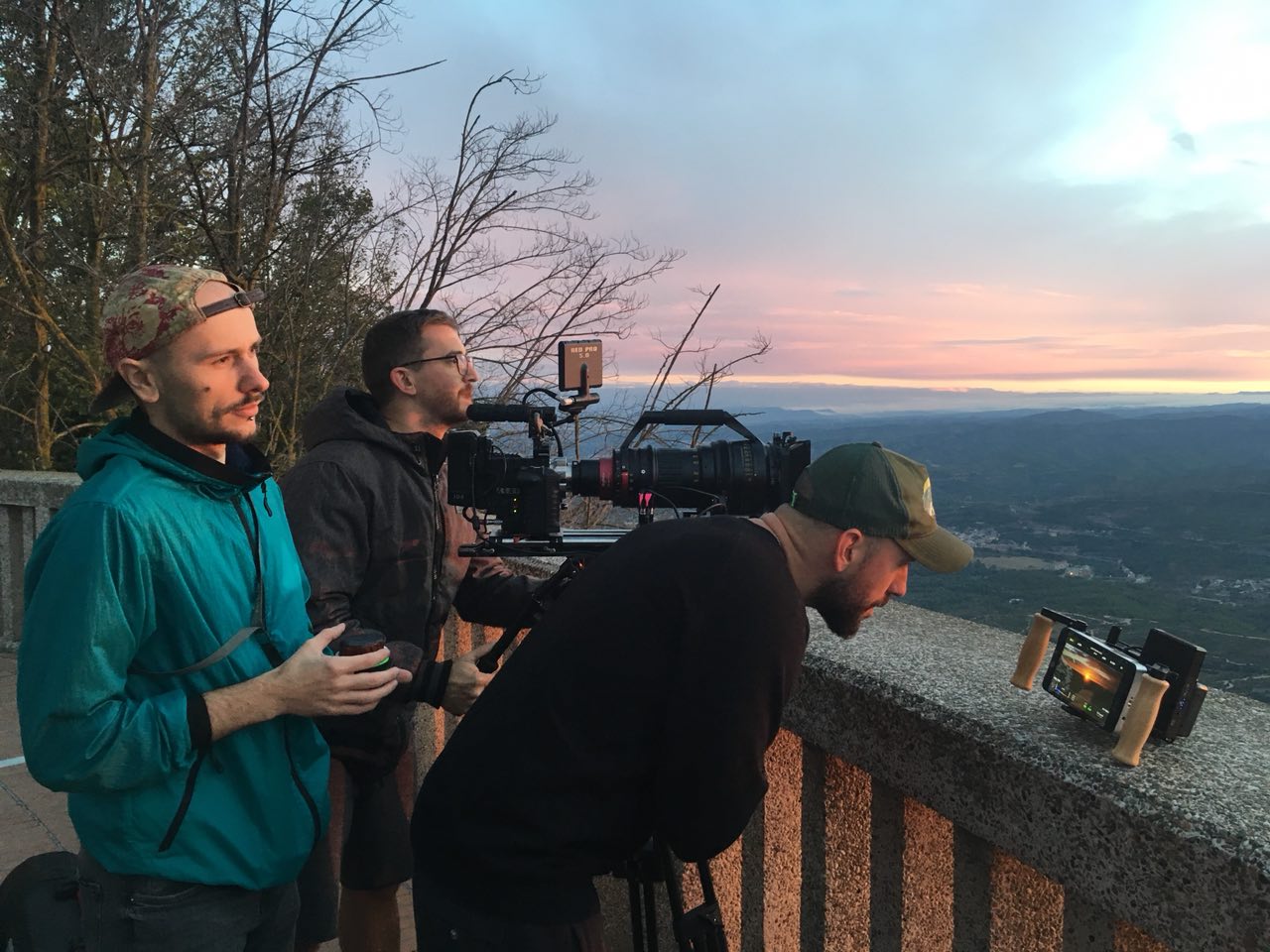
Pedro de la Fuente and James Worsley first encountered castells through a badly shot online video five years before they made the film. The image stayed with them, and when a commercial job brought them to Barcelona in March 2018, they made the call to investigate. Within days they were meeting one of the teams with no camera, no script, and no certainty there was a film to be made. Their instinct was to let the subject inform them before they started shooting — a discipline that paid off in the finished film's intimacy and confidence.
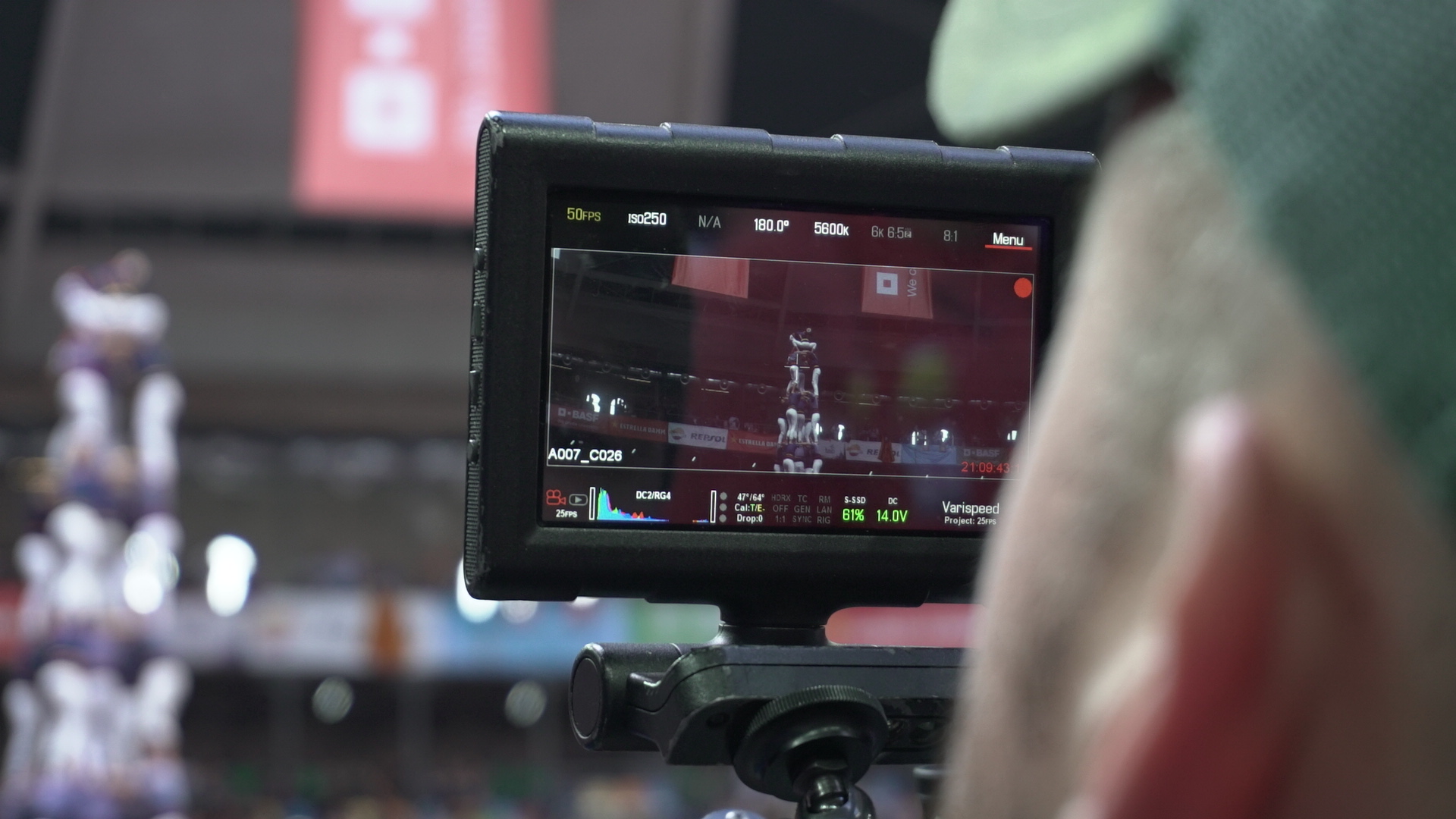
The shoot took place in two phases: four days in October around the Tarragona competition, the largest stadium castell event of the year, and another four to five days a month later for the season's closing performance. The camera — a Red Epic Dragon with Kowa anamorphic lenses and an Angeniux 44-440mm zoom — was used almost entirely on natural light, with bounce and negative fill used only to shape what was already there. The anamorphic glass gives the film its particular width and depth, making the towers feel taller and the crowds feel denser than any spherical lens would have managed.
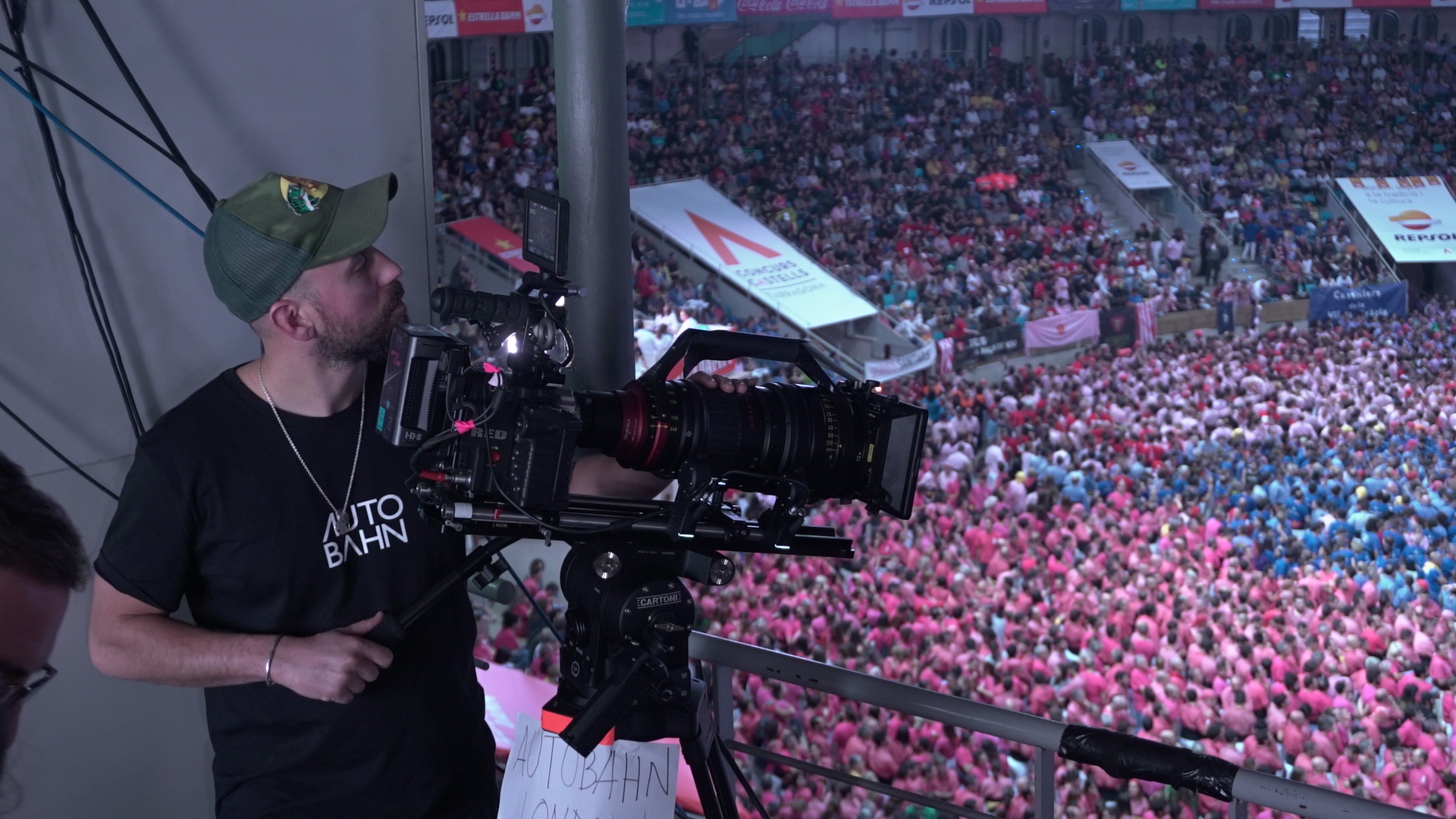
The edit was a joint effort between Worsley, de la Fuente, and the wider Autobahn team over two months, with a further month spent finessing before release. Castells earned a Vimeo Staff Pick on release and a feature on It's Nice That, and went on to be one of the most shared short documentaries of 2019. De la Fuente has described the film's central ambition simply: to make something that feels truthful and not set up, where the emotion of standing inside a castell is transferred directly to the viewer. The film achieves that. When the towers fall — and some of them do — you feel it.
For Filmmakers: Lessons from CASTELLS
Go without the camera first. Autobahn's first trip to Catalonia was deliberately camera-free. Allowing the subject to inform you before you start shooting produces a film with a different quality of attention than one made from the outside looking in.
Favour emotion over information. De la Fuente's principle for the film was explicit: image and feeling before fact. The film teaches you everything you need to know about castells without telling you anything directly.
Let the score build with the subject. Russ Chimes's music does not illustrate the towers — it enacts them, accumulating pressure in the same way the bodies do. When score and subject share the same structural logic, the film becomes something more than the sum of its parts.
Choose your glass deliberately. The Kowa anamorphic lenses were a formal decision that shaped the film's entire visual register. The width and compression of anamorphic glass made the towers taller and the crowds denser. Format is not a technical choice. It is an argument.
Collaboration is not compromise. The edit, the score, the sound design, and the grade were each handled by different collaborators, and the film is richer for every one of them. Knowing where your own contribution ends and when to hand it to someone better is its own craft.
Verdict
Castells is a documentary short that trusts its subject completely and earns that trust with formal intelligence: anamorphic cameras, a building score, and an edit that knows exactly when to hold and when to cut. It places you inside one of the most visually extraordinary communal traditions on earth and asks nothing of you except attention. That is enough. More than enough.
⭐ Curated Shorts Pick
Communal breathtaking precise